 Managing Adult Malnutrition
Including a pathway for the appropriate use of
oral nutritional supplements (ONS)
Managing Adult Malnutrition according to 'MUST'
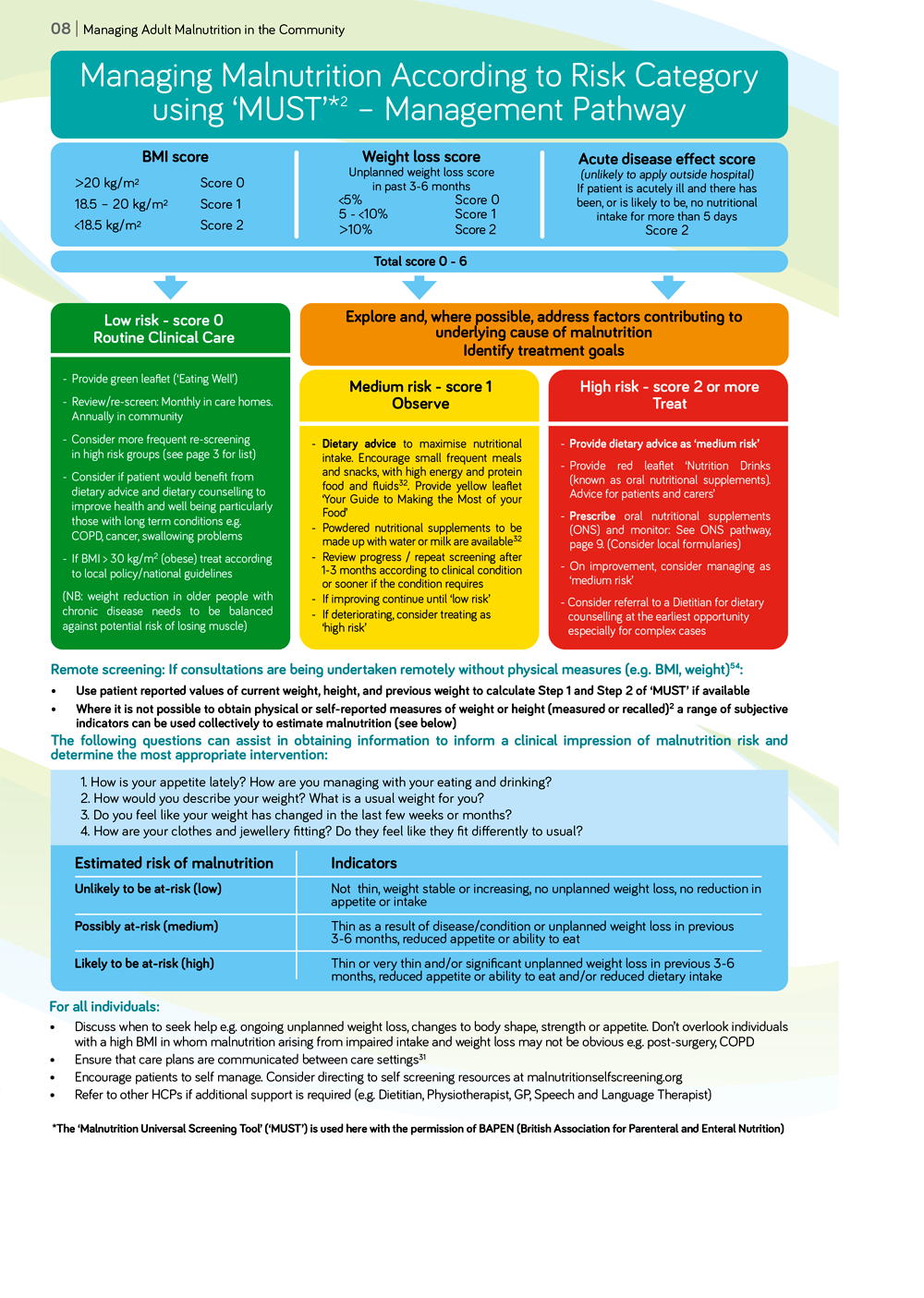 In most cases malnutrition can be managed using dietary advice to optimise food intake with oral nutritional supplements (ONS) being used when food intake has been demonstrated to be insufficient, or when it is anticipated food alone will not meet nutritional requirements32.
- All patients at risk of malnutrition should have a care plan, where applicable this should link to their overall disease management pathway
- Consider a multidisciplinary team approach to determine the optimal nutritional strategy for the patient. The team may include a GP, Occupational Therapist, Practice Pharmacist, Dietitian, Physiotherapist, Community Pharmacist, Nurse, Speech and Language Therapist and Social Prescriber
- Oral nutritional support can comprise some or all of the following: fortifying food and fluids with protein, carbohydrate and/or fat, vitamin and mineral supplementation, the use of snacks, nourishing drinks and/or oral nutritional supplements in addition to regular meals; changing meal patterns; practical measures such as assistance with eating, shopping (physical and financial) and preparation of food; texture modifications.29
- The intervention and goals should be determined through a thorough assessment and an understanding of what is feasible, acceptable and practical to the patient and carers
- When determining the intervention it is important to note that the disease itself along with associated treatments (including medications), can cause physiological changes that suppress appetite, reduce the desire to eat, trigger early satiety (a feeling of fullness after a small amount of food), affect taste and alter metabolism which in turn alters body composition (such as muscle mass). These effects may limit the effectiveness of a food-only approach and the use of ONS may need to be considered earlier in management pathway to avoid unnecessary deterioration and to minimise any loss of muscle and function that at a later time may be irreversible
- Taking into account the trajectory of the disease i.e. is it curative or palliative is important to guide how assertive the intervention should be32. Educating the patient and carer on the likely benefits and managing expectations on what can be realistically achieved are also crucial components of care.
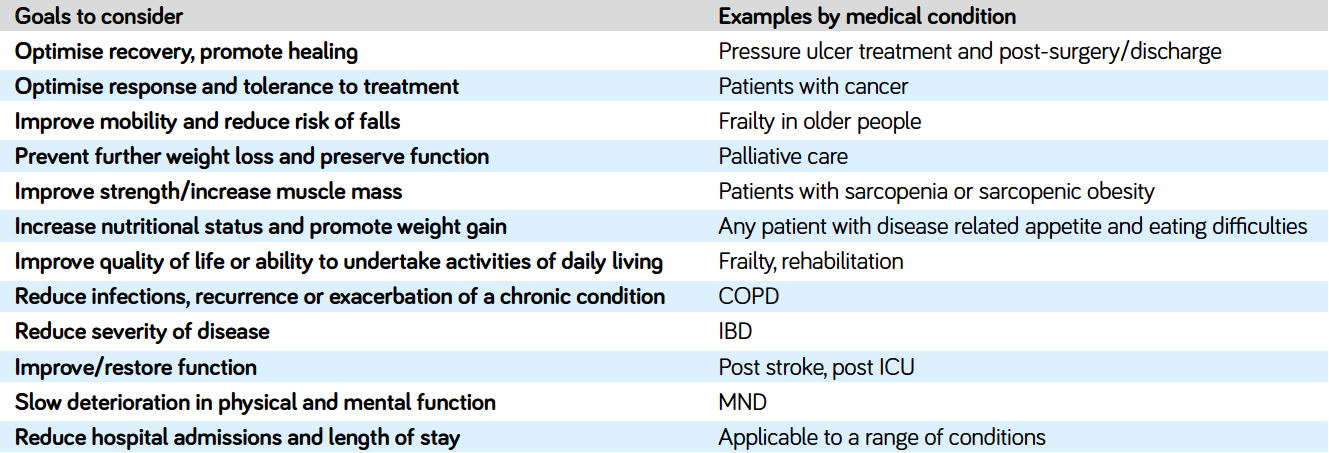
Goal setting
Agreeing realistic goals intervention with the patient and carers, should be an integral component of management. When setting goals it is important to consider disease stage and treatment.
Examples of Goals
Monitoring the Intervention
Monitor progress against goals and modify intervention appropriately, maintain communication channels and adjust care plan according to patient feedback:
- Consider weight, strength, physical appearance, mood, appetite, ability to perform activities of daily living and compare with the goals originally set
- Frequency of monitoring depends on nutritional status of patient, care setting, treatment, disease prognosis and organisational policy.
Managing Adult Malnutrition
Oral Nutritional Supplements: Where individuals require (or already have) a prescription of ONS, this pathway will guide you in setting goals, deciding on dose and duration of ONS, how and when to monitor progress and when to discontinue prescription.
A Guide to Managing Adult Malnutrition in the Community: the complete document is available.
Resources
A selection of publications for use by healthcare professionals, patients and carers are available in the resources section of the website.
Support for Patients & Carers
A number of resources are available that have been developed to support patients and carers.
Further Information
We can be contacted regarding the malnutrition pathway materials and website
No part of this site may be reproduced in whole or in part in any manner without the permission of the copyright owner.